I’d like to introduce you to Gogacz.
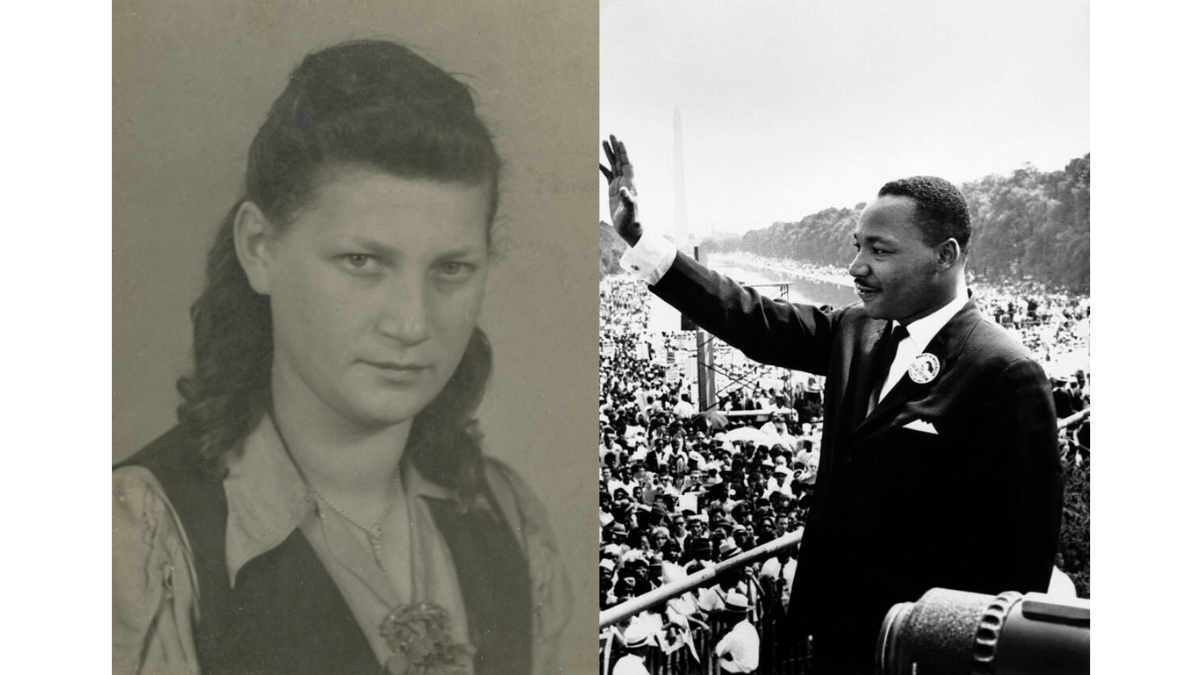
Is that his first name? Last name? Nickname? I’m not really sure. But what I do know is this man saved my mother’s life while forced into service by the Germans as a taskmaster at her concentration camp. He was Polish and Catholic, probably in his twenties. She was Polish, Jewish and barely into puberty. She possessed a streak of defiance that tested boundaries. One day, she crossed them. A German with a rifle was about to blow her brains out … except for Gogacz.
He did something pretty basic. We like to label it “doing the right thing.” He didn’t look the other way. He spoke up. He took action.
“She’s my best worker; I’ll take responsibility for what she did,” my mother, Sally Finkelstein Horwitz, recalled him telling the murderer-to-be. Gogacz’s reward? A rifle butt to the skull. For my mother, another chance at life.
“I’m here because of what that otherwise ordinary man did, something decent, selfless and heroic,” I shared last week with a group of about 100 Mason Middle School visitors to Michigan’s Zekelman Holocaust Center. “And so are they…”
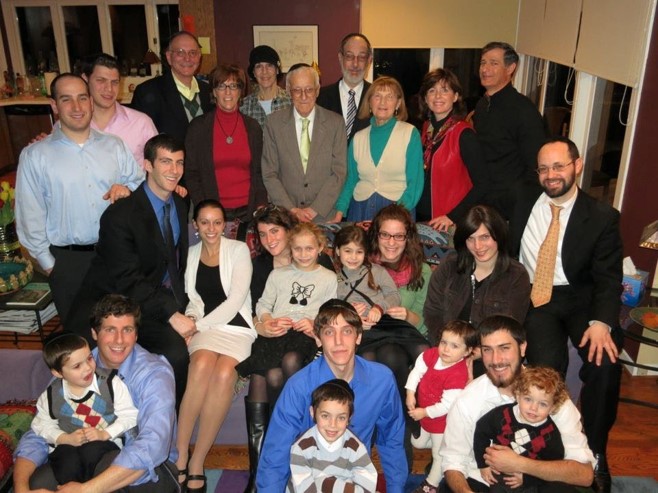
At that moment, I projected a family photo of my mother and American-born father surrounded by their children, grandchildren and great-grandchildren. I placed my laser point on two faces, my older brother Len and my son, Adam. “No Gogacz, no Dr. Leonard Horwitz. No Gogacz, no Dr. Adam Horwitz.”
I shared that my brother’s work as a bone marrow transplanter / hematologist / oncologist and my son’s research marrying cutting-edge technology and wearables like Apple watches to head off bouts of depression and suicide ideation among teens and PTSD veterans have already improved, and will improve, the lives of thousands.
“Here we are, more than 80 years later, talking about Gogacz. For one reason. He refused to be a bystander. Neither should you,” I concluded. “Speak up, speak out, take action against antisemitism, hatred and bigotry whenever and wherever you see it.”
As I watched the students depart the auditorium, just one batch among the thousands who tour the museum annually and hear children of Holocaust survivors – like me – reveal our stories and those of our parents, my thoughts drift to recent headlines about the national and global rise of antisemitism.
Was Robert Kraft’s multi-million-dollar Super Bowl advertisement a hit or a dud? Has the Jewish community wasted tens, if not hundreds of millions of dollars on Holocaust education, initiatives of the Anti-Defamation League (ADL) and outreach to communities who refused to speak up in the aftermath of the October 7, 2023 Hamas massacre … and still do? Would American Jews be better served looking inward, investing these sums – and more – in Jewish education and strengthening Jewish identity?
Those participating in these debates bring quantitative analyses, survey research, focus groups (and their guts) to support their positions or rebut those of others.
All I bring to the table is one datapoint: Gogacz… A very ordinary man who refused to be a bystander. Who spoke up. Who took action. Who indirectly extended, or will extend, the lives of thousands.
Will one or more of my student visitors be the next Gogacz? Tomorrow? In twenty years? Will they save lives? Help improve our fractured world? I challenge those who believe that investment in Holocaust education is a waste of dollars to try and quantify that.